








Sovereign AI or Digital Colonialism. Africa’s Defining Choice in the AI Century.
-
- February 22, 2026

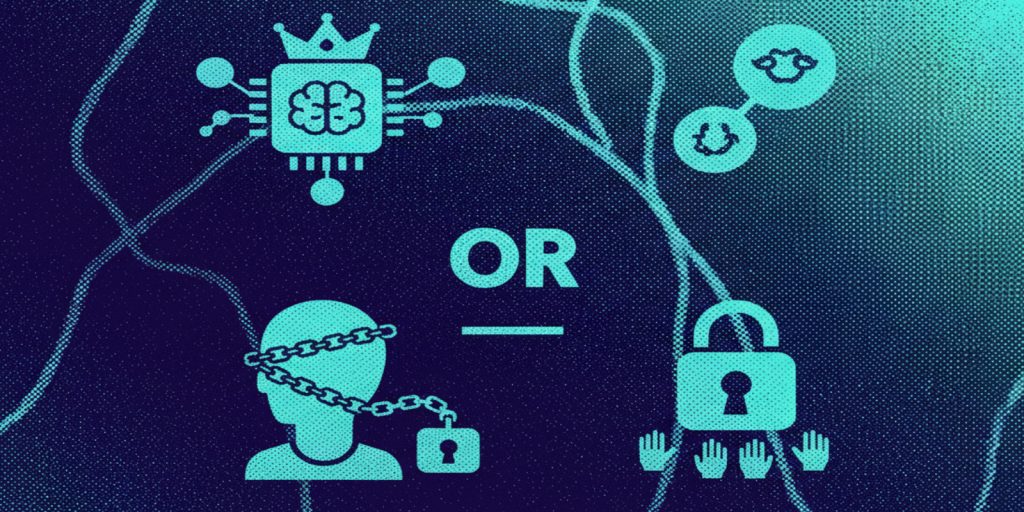
Forget everything you know about technology advancement for a second. Instead, look at it through this lens…
You’re in Accra, laptop on your lap, fan spinning as if it owes you money. Your startup team in Ho is on the line. Your biggest client in Lagos is sharing screens. Deals are closing. Ideas are flying. Then, blackout. Not ECG or NEPA. Not network. A single policy shift in Washington. Your entire meeting history, client contracts, strategy decks, and voice notes vanish behind a digital wall you don’t control.
That scenario just stopped being science fiction for 2.5 million French civil servants.
In January 2026, France announced that it is building Visio, a sovereign French-built alternative, so that it can run autonomously on its own systems during any glitch, policy shift, or sovereignty need.
Why? Because Trump is back, tariffs are flying, Greenland jokes turned into real tension, and Europe suddenly remembered a brutal truth:
If you don’t control your data, you don’t control your future.
The French minister said it plainly: “We cannot risk having our scientific exchanges, sensitive data, and strategic innovations exposed to non-European actors.”
France, a nuclear power, G7 member, and former colonial empire, looked at the chessboard and realized, “Whoopsie,” they needed to build their own infrastructure to stay in control.
Now ask yourself: If France is building for autonomy, what the heck is Africa still doing hosting its future on foreign servers without moving at the speed of light to build and invest in local infrastructure?
Data Is the New Oil. And We’re Letting Strangers Drink It All
Every time a Ghanaian farmer snaps a photo of diseased cassava leaves on his cheap Android…
Every time a Nigerian mother logs her child’s vaccination on a health app…
Every time a Kenyan entrepreneur records a voice note in Swahili…
That data doesn’t stay in Africa. That data gets pulled back and launched like a stone in a catapult across the seas…
It flies to Virginia, Oregon, or some hyperscale data center in Europe, gets vacuumed into training sets for models built by people who’ve never seen harmattan, never tasted fufu, never watched a trotro break down in the rainy season.
And those models? They come back to us as “solutions” that hallucinate in English, ignore our 2,000+ languages, and optimize for American attention economies instead of African realities.
This isn’t an inconvenience.
This is digital colonialism 2.0, softer, faster, more profitable than the first.
The United States controls the platforms and the cloud giants. China controls the hardware, the undersea cables, and increasingly the data centers sprouting across the continent (Huawei doesn’t build them out of charity). Both superpowers understand one thing Africa is still pretending not to see:
In the AI age, the nation that owns its data owns the 21st century.

China built the Great Firewall and sovereign AI. The U.S. passed the CHIPS Act and invested billions in semiconductor supremacy. Europe is now scrambling with Gaia-X and national clouds.
Most regions of the world are decoupling or backtracking from complete dependence on foreign digital infrastructure.
Europe is racing ahead with its own sovereign tech stacks.
China has sealed its digital borders, built world-class domestic AI, and even open-sourced some of the world’s most powerful AI models, ranging from text-based to multimodal.
Nations across Asia and Latin America are enforcing strict data localization and building independent infrastructure.
Most countries and continents are moving, except us.
And Africa?
We’re still celebrating “free” foreign tools while our existential data, health, agriculture, education, finance, and governance leak out like sand through open fingers.
The Risks Aren’t Theoretical, They’re Existential
What happens when a U.S. administration decides African data “poses national security risks” and throttles access?
What happens when a Chinese-built data center in your country gets “maintenance issues” during an election?
What happens when your national ID system, your mobile money rails, your climate adaptation models all live on someone else’s infrastructure?
You become a digital vassal state.
Your government can be pressured.
Your businesses can be crippled overnight.
Your innovators can be forced to build on rented land.
We’ve seen the previews:
Social media blackouts during protests (not our servers).
Payment rails frozen by foreign compliance (not our rules).
AI tools that can’t understand “akple” or “jollof” but will confidently tell you how to farm it.
This is not paranoia. This is pattern recognition.
The Future Is Edge Intelligence, And It Must Be Built Here
Here’s the part that should light a fire under every African builder reading this:
The winning technology of the next decade isn’t bigger clouds in California.
It’s edge intelligence: AI that runs on the device, in the village, on a solar-powered Raspberry Pi, with zero need for constant internet access, powered by the local data centers and digital infrastructure we must build right here on African soil, and we can leverage partnerships from developed nations to make it happen.
A farmer in rural Northern Ghana doesn’t need ChatGPT in the cloud to detect fall armyworm on his maize. He needs a model that runs locally, is trained on Ghanaian crops, speaks Dagbani, and works offline when the network dies (which it will). And that local intelligence only becomes unstoppable when it’s anchored to sovereign data centers humming across the continent, hyperscale facilities built with our own capital, powered by our abundant solar and hydro energy, storing and processing our data under our own laws.
A clinic in Kibera doesn’t need to send patient ultrasounds to Seattle for analysis. It needs on-device diagnostics or direct connection to a local data center that respects Kenyan data laws and cultural context, all backed by regional data centers that keep the heavy lifting sovereign, secure, and always available.
This is not a nice-to-have.
This is sovereign infrastructure.
We must build both: edge intelligence that lives in the hands of the people and the local data centers, and the digital backbone that makes it unbreakable. No more renting our future from Virginia or Shenzhen. So that even when glitches hit or sovereignty demands arise, we run autonomously on systems we own.
And the beautiful part? Africa’s constraints are actually our greatest advantage:
Poor connectivity? → Forces us to master edge computing first.
Diverse languages and realities? → Forces us to build truly multilingual, contextual frontier models.
Youthful population exploding with talent? → We have the builders.
Countries like Kenya, Ghana, Rwanda, Senegal, and Nigeria are already planting seeds, building local data centers, developing national AI strategies, and releasing open datasets. But seeds are not forests. We need an ecosystem explosion.
To the Builders, the Dreamers, the “Too Ambitious” Ones
This is your mandate.
Yes, continue building wrappers around OpenAI and leading frontier models, but…
Start training frontier models on African data, for African problems.
Leverage Academia, Government, and Industry Collaborations (AGI).
Invest massively in infrastructure and brilliant minds or talents.
Build cross-border standards and policies, and embrace the free movement agenda.
Start demanding and building a sovereign cloud infrastructure powered by our own solar abundance.
Stop optimizing for foreign venture metrics.
Start optimizing for resilience in blackouts, low-bandwidth villages, and languages the world forgot.
The ones who master local data → local models → edge intelligence will not just survive the AI century; they will thrive.
They will own it.
France is showing the world that even superpowers are building the infrastructure to run autonomously without flinching when control is threatened. China and America are already in the ring fighting for digital supremacy.
Africa doesn’t need to choose sides.
We need to build our own damn ring.
This is not about isolation. It’s about resilient partnership from a position of strength.
Because in the age of AI, sovereignty isn’t a luxury.
It’s the difference between being a player…
…and being played.
The data is already being generated on our soil, in our languages, from our struggles.
The only question left is:
Who will own the intelligence it creates?
Let the answer be us.
Let it start today.
Let it be unstoppable.
Welcome to the real geopolitics of the 21st century.
The most powerful nation on earth, the US, has set a fine example for us.
Digital sovereignty isn’t coming.
It’s already here, and Africa still has time to seize it.
But the window is closing faster than 5G in a Lagos traffic jam.
Build. Now.